
From the Founding Fathers to a Global City
Dubai’s transformation is one of the most remarkable development stories of the modern era. From a trading settlement centred around Dubai Creek to a global hub for tourism, aviation, finance, technology and investment, the city’s growth has been shaped by long-term planning, bold infrastructure decisions and leadership that consistently looked beyond the present.
The story of modern Dubai is also part of the wider story of the United Arab Emirates. Across generations, the country’s leaders have placed unity, economic diversification, human capital and future readiness at the centre of national development.
- The Foundations of the UAE
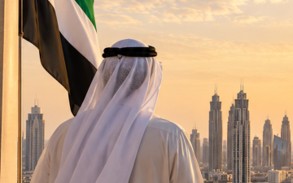
The modern story begins with the late Sheikh Zayed bin Sultan Al Nahyan, Founding Father and first President of the UAE, and the late Sheikh Rashid bin Saeed Al Maktoum, former Ruler of Dubai. In February 1968, the two leaders agreed to work toward a federation, a process that ultimately led to the establishment of the United Arab Emirates on 2 December 1971.
The Union created a stable national foundation for long-term development. It connected the emirates through a shared vision while allowing each emirate to develop its own strengths within a united country.
“Those who forget their past, compromise their future.”
Sheikh Zayed bin Sultan Al Nahyan
- Sheikh Rashid and the Early Rise of Dubai
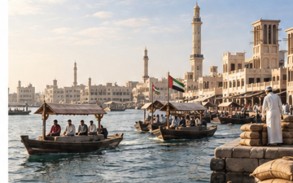
Under Sheikh Rashid bin Saeed Al Maktoum, Dubai invested early in infrastructure, trade and connectivity. Dubai Creek, roads, bridges, ports, utilities and airport development helped the emirate expand its role as a regional commercial centre.
Official UAE sources describe Sheikh Rashid as one of the great visionaries of the modern UAE and credit his leadership with helping Dubai grow from a small trading town into a major cosmopolitan city. His approach established a principle that still defines Dubai: invest in the infrastructure the future will need before the demand fully arrives.
“Every citizen in this country has the opportunity to express their opinion frankly and clearly and to criticise the government as well.”
Sheikh Rashid bin Saeed Al Maktoum
- Sheikh Mohammed bin Rashid and Global Dubai
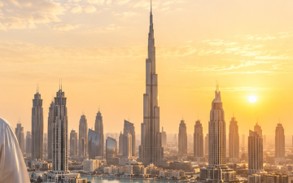
His Highness Sheikh Mohammed bin Rashid Al Maktoum, Vice President and Prime Minister of the UAE and Ruler of Dubai, has played a central role in accelerating Dubai’s emergence as a global city. He became Ruler of Dubai in January 2006, after decades of involvement in the emirate’s aviation, economic and infrastructure development.
Under his leadership, Dubai strengthened its position in global aviation, tourism, trade, digital government, financial services and innovation. The city’s strategy has consistently linked ambitious projects with a clear objective: improve competitiveness, attract talent and investment, and make Dubai one of the world’s best places to live, work and visit.
“In the race for excellence there is no finish line.”
Sheikh Mohammed bin Rashid Al Maktoum
- From Infrastructure to an International Destination
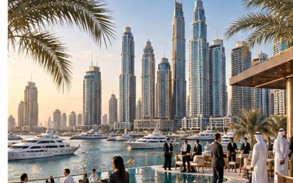
Dubai’s international identity was built through more than architecture. Airports connected the city to the world. Free zones made it easier for international businesses to operate. Hospitality and tourism created a global visitor economy, while financial centres, waterfront districts and major real estate developments reshaped the city’s urban identity.
This combination turned infrastructure into opportunity. Dubai became a destination not only for tourists, but also for investors, entrepreneurs, companies and skilled professionals from around the world.
- Sheikh Mohamed bin Zayed and the UAE’s Future Vision
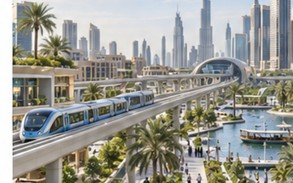
His Highness Sheikh Mohamed bin Zayed Al Nahyan has served as President of the United Arab Emirates since May 2022. His national development vision places strong emphasis on people, education, science, technology, economic diversification and long-term resilience.
This approach is important to Dubai as well as to the UAE as a whole. The country’s next stage of growth is increasingly based on knowledge, advanced technology, clean energy, innovation and the capabilities of its people.
“The human capital is the true wealth of our nation.”
Sheikh Mohamed bin Zayed Al Nahyan
- The Dubai 2040 Urban Master Plan
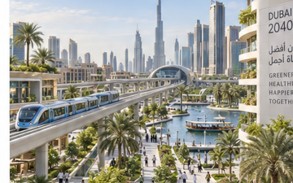
Modern Dubai is now entering another stage of planned growth. The Dubai 2040 Urban Master Plan is the emirate’s seventh development plan since 1960 and focuses on quality of life, sustainable mobility, inclusive communities, green spaces and the protection of cultural and urban heritage.
The scale of Dubai’s transformation is striking: between 1960 and 2020, the population increased from around 40,000 to 3.3 million, while the emirate’s urban and built-up area expanded around 170-fold. The 2040 plan seeks to manage future growth while making the city healthier, greener and more connected.
- D33: The Next Chapter of Economic Growth
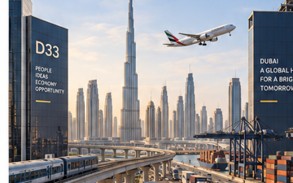
On 4 January 2023, Sheikh Mohammed bin Rashid launched the Dubai Economic Agenda D33. Its headline goal is to double the size of Dubai’s economy over the following decade and consolidate the city’s position among the world’s top three global cities.
D33 sets total economic targets of AED 32 trillion by 2033 and focuses on trade, foreign investment, human development, advanced technology, digital transformation and new-economy sectors. It is designed to extend Dubai’s development model into the next decade while strengthening the city’s role as a platform for global business and opportunity.
“The world makes way for those who know what they want.”
Sheikh Mohammed bin Rashid Al Maktoum
 A City Still Looking Ahead
Dubai’s story is not only about the skyline. It is about a development culture built around planning, execution, openness to global talent and the confidence to keep investing in the future. The city continues to evolve while remaining connected to the broader success of the UAE.
From federation and early trading infrastructure to global aviation, tourism, technology and sustainable urban planning, each stage has created the foundation for the next. Dubai’s defining characteristic may be that even after decades of extraordinary growth, it continues to plan as though its most important achievements are still ahead.
“We think and plan for the next fifty years, and for the benefit of next generations.”
Sheikh Mohamed bin Zayed Al Nahyan
Conclusion
Modern Dubai is the result of a continuous vision across generations: the foundations laid by the Founding Fathers, the infrastructure-led development of Sheikh Rashid, the global ambition advanced by Sheikh Mohammed bin Rashid, and a wider UAE strategy under Sheikh Mohamed bin Zayed that places people, knowledge and long-term sustainability at the centre of progress. Together, these ideas have helped shape a city recognised around the world for its ability to turn ambition into reality.
Official Sources & Quote Verification
- UAE Government – Founders of the Union
- UAE Government – Dubai 2040 Urban Master Plan
- Dubai Government Media Office – Dubai Economic Agenda D33
- Official Website of Sheikh Mohammed – Dubai Government Excellence Program
- Emirates News Agency – Hope Probe and human capital quote
- Emirates News Agency – UAE economic vision for the next 50 years
- UAE Government – Plan Abu Dhabi 2030 (Sheikh Zayed quote)